

Families & Caregivers
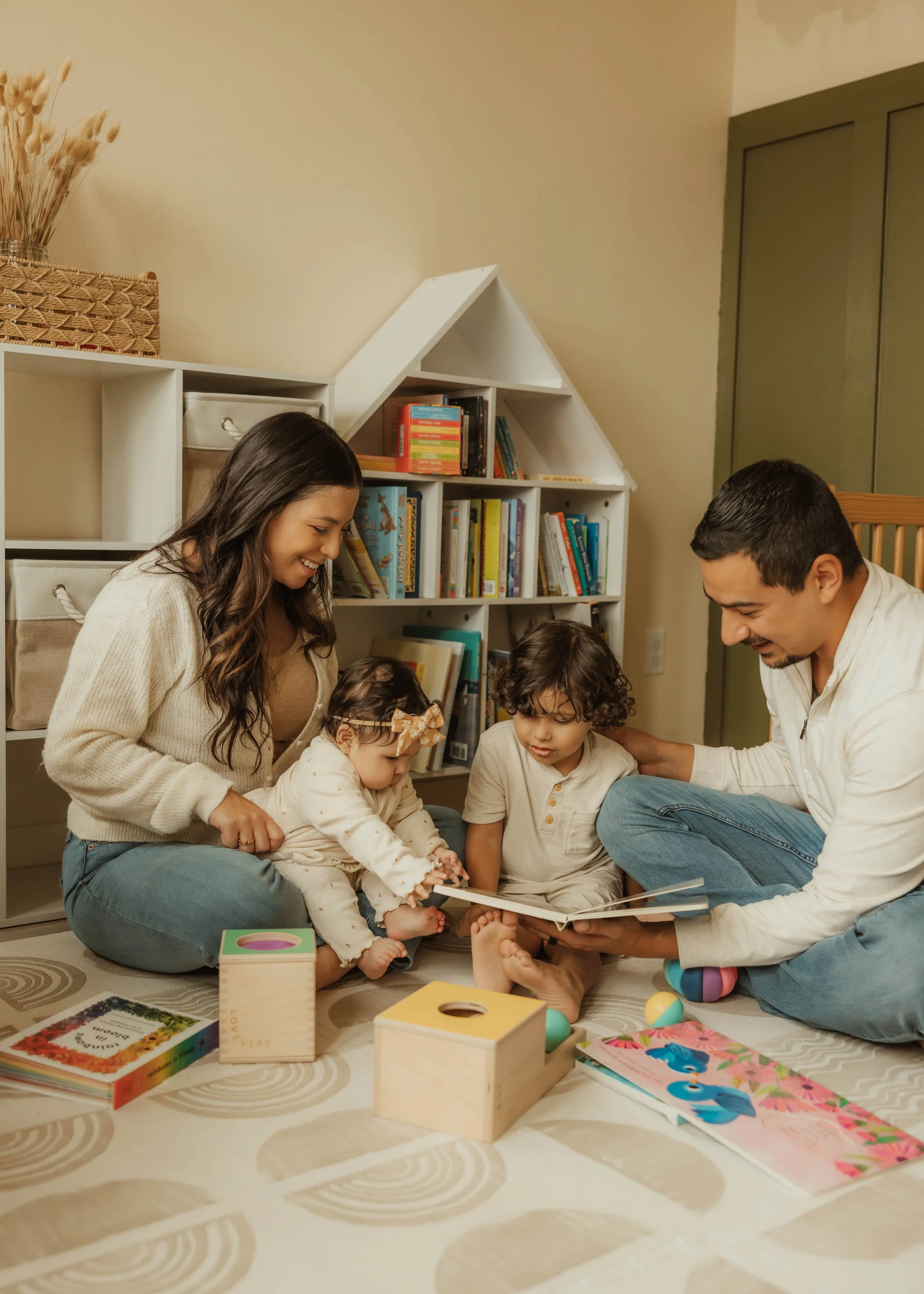
Supporting family life through intentional rhythms & connection.
Family life is full, layered, and constantly changing.
You may be balancing the needs of your child, your partner, your work, and yourself all at once, while trying to create routines that actually work.
Some days feel good.
Other days feel chaotic, reactive, or harder than they should.
You might notice:
routines that don’t quite hold
transitions that feel overwhelming
more frustration, more power struggles, or less patience than you want
a sense that everyone’s needs are competing at the same time
When daily life feels off, it does not just affect one person.
It impacts connection, regulation, and well-being across the whole family.
At Root & Rhythm, we see families as connected systems.
When one part feels unsupported, the whole system feels it.
And when the system is supported, everything begins to shift.
Why Does This Matter?
Children thrive in environments that feel predictable, responsive, and supportive.
Caregivers thrive when their days feel manageable and aligned with their capacity.
Without support, families can get stuck in cycles of:
stress and reactivity
constant correction or conflict
exhaustion and burnout
feeling like nothing is quite working despite your best effort
Support is not about fixing your child or controlling behavior.
It is about understanding what is underneath those moments and creating a daily life that better supports everyone involved.


How Occupational Therapy Helps
Occupational therapy looks at how your family’s daily life is actually functioning in real time.
At Root & Rhythm, we work with both caregivers and children to create rhythms, environments, and interactions that feel more supportive and sustainable.
Together, we may:
Support routines around sleep, meals, play, school, and transitions
Build emotional regulation and co-regulation strategies for both children and caregivers
Explore sensory needs and adjust environments to reduce overwhelm
Strengthen communication and connection within the family
Support development through everyday activities and meaningful play
Help caregivers feel more confident, supported, and less alone in their role